
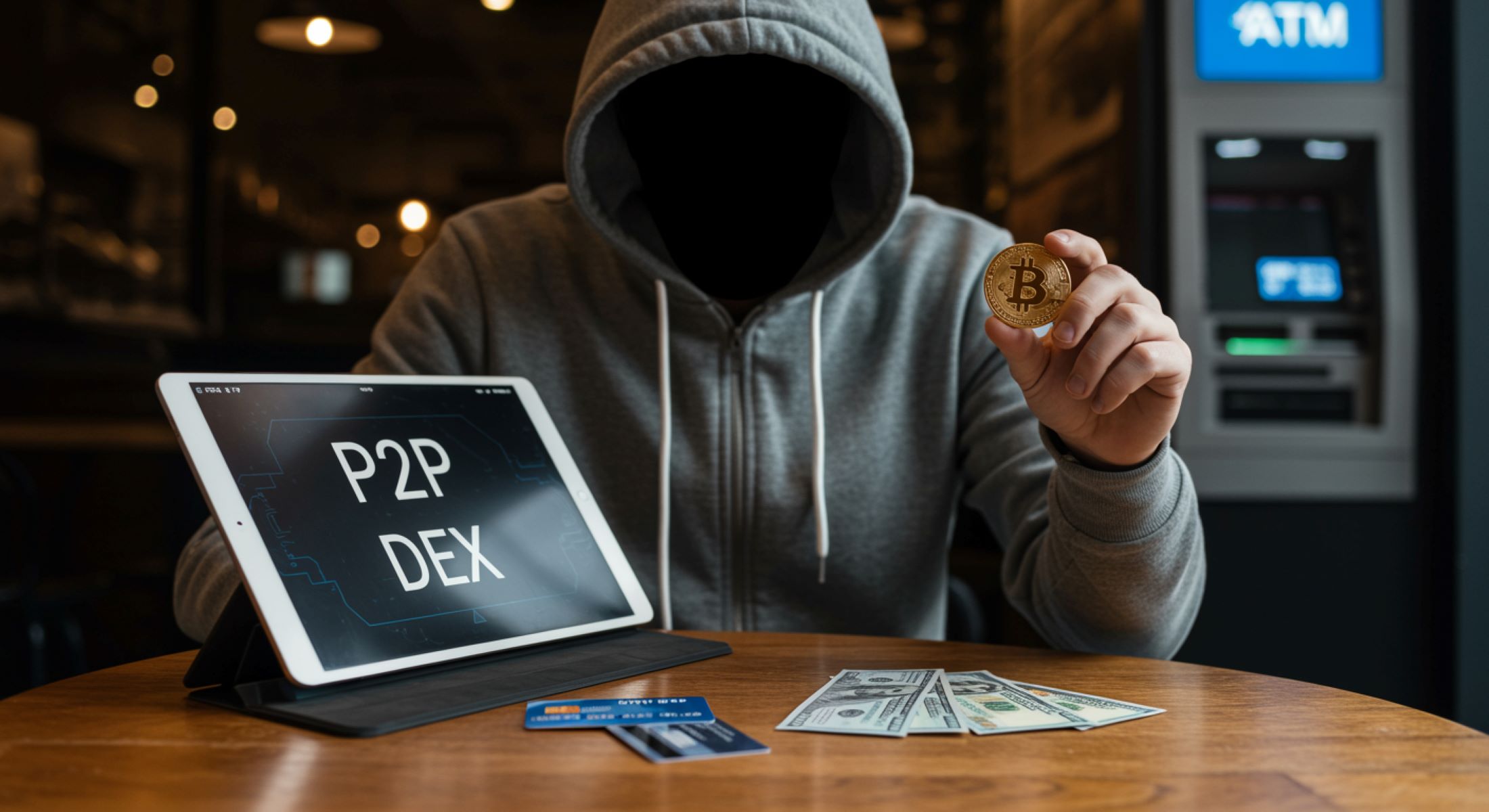
Buying cryptocurrency anonymously isn’t a scene from a spy film — it’s a practical option for people who value privacy or want to avoid lengthy identity checks. In this guide, you’ll learn how to buy crypto privately using cash, credit cards, or vouchers, and understand the trade-offs between anonymity and convenience.
If privacy is your top priority, methods such as cash payments, vouchers, or gift cards via reputable peer-to-peer (P2P) marketplaces are your best options. Platforms like Bisq, Hodl Hodl, and LocalCryptos (archived) have allowed users to trade Bitcoin and other cryptocurrencies directly without identity verification, depending on the region. Bitcoin ATMs may also permit small cash purchases without ID, although this depends heavily on the operator and local regulations.
If you prefer speed and simplicity over anonymity, you can buy Bitcoin instantly with a credit or debit card (Visa or Mastercard) on major exchanges using USD, GBP, or EUR. However, card purchases on regulated platforms such as Binance, Coinbase, or Kraken always require KYC verification. These transactions are fast but not private, as your identity and payment details are linked to the purchase.
Why Buy Crypto Anonymously?
Before exploring how to buy cryptocurrency anonymously, it’s worth understanding why some people choose this approach. The primary motivation is privacy. In today’s digital economy, most financial transactions are monitored and recorded by banks, corporations, and governments. For some individuals, this level of visibility feels intrusive. Buying crypto anonymously helps preserve financial privacy, making it harder for third parties to trace purchases or holdings.
Another common reason is to avoid Know Your Customer (KYC) procedures. Most centralized exchanges require users to verify their identity using documents such as passports or driver’s licenses. While these checks improve platform security and regulatory compliance, they also reduce user privacy. For those who prefer discretion, anonymous purchasing offers a faster, less invasive alternative.
Security concerns also play a role. With cybercrime and identity theft on the rise, sharing personal documents online introduces risk. Buying cryptocurrency without KYC limits how much personal data is exposed, lowering the likelihood of data leaks or identity-related fraud.
Finally, anonymity can provide a degree of financial freedom. In regions with strict capital controls, banking restrictions, or unstable currencies, being able to buy crypto privately offers a secure and independent way to store or transfer value. However, it’s crucial to remember that anonymity is never absolute. Most privacy methods can still be traced through blockchain analysis or legal requests. Regulations are in place to prevent money laundering and illegal activity, so users should always act within the law.
Understanding the Basics: What Does “Anonymous” Really Mean?
Anonymity Doesn’t Mean Invisibility
Buying cryptocurrency anonymously doesn’t make your transactions disappear. It simply means your personal identity—like your name, address, or ID—isn’t directly tied to the purchase. The transaction still appears on the blockchain, but your identifying details remain hidden.
Pseudonymity Is More Accurate
Most crypto activity is pseudonymous, not truly anonymous. Transactions are connected to wallet addresses, which act like usernames or aliases. These addresses don’t reveal your real name, but they’re publicly visible and traceable on the blockchain.
Blockchain Transparency vs. Personal Privacy
Blockchains are public ledgers, meaning anyone can view transaction histories and wallet balances. However, without extra data—such as IP logs, exchange records, or personal identifiers—wallet addresses alone don’t identify their owners. This creates a balance between transparency and personal privacy.
Wallet Addresses Don’t Hold Personal Data
A wallet address is just a string of numbers and letters. On its own, it contains no personal information. However, when combined with KYC records or metadata like IP addresses, it can sometimes be linked back to you.
Complete Anonymity Is Rare
True anonymity in cryptocurrency is extremely difficult to achieve. Since every transaction is permanently recorded on the blockchain, most users rely on pseudonymity rather than complete invisibility.
Regulations Limit Anonymous Transactions
Due to Know Your Customer (KYC) and Anti-Money Laundering (AML) laws, most centralized exchanges are required to verify user identities. These rules limit opportunities to buy crypto completely anonymously, especially in regions like the U.S. and the European Union.
Anonymous Buying Minimizes Data Exposure
The goal of anonymous or low-KYC buying isn’t to erase all evidence of a transaction—it’s to reduce how much personal data is shared. Using privacy-oriented methods makes it harder to link your real identity to your crypto activity.
Different Methods Offer Different Levels of Privacy
Not all payment methods offer the same level of anonymity. Cash and vouchers reveal little about you, while credit cards and bank transfers involve personal banking data. The right choice depends on your privacy needs, comfort level, and local regulations.
Methods to Buy Crypto Anonymously
| Method | Description | Level of Anonymity | Pros | Cons |
| Cash in Person | Buying crypto directly from another person using physical cash, often arranged offline or via P2P platforms. | High anonymity as no digital trace links to your identity. | No personal data required; instant and private. | Risk of scams or fraud; limited availability depending on location. |
| Crypto Vouchers / Gift Cards | Purchase prepaid crypto vouchers or gift cards from retail outlets or online, then redeem them for crypto. | Moderate anonymity, as buying cards with cash limits data exposure. | Easy to use; widely available; no ID needed when purchased with cash. | Some vouchers have expiry or fees; not all platforms accept them. |
| Peer-to-Peer (P2P) Exchanges | Platforms where buyers and sellers connect directly to trade crypto using various payment methods, including cash or vouchers. | Variable anonymity depending on platform and payment method. | Flexible payment options; often no KYC for small trades. | Potential risk of scams; platform reputation matters; may require some data. |
| Bitcoin ATMs Accepting Cash | Physical machines that allow buying Bitcoin and other cryptos using cash without needing ID for small amounts. | Moderate to high anonymity for small purchases. | Quick and easy; cash-based; no need for bank accounts. | Limited locations; fees can be high; larger amounts may require ID. |
| Decentralized Exchanges (DEX) | Platforms that operate without central authority, enabling crypto trading without KYC by connecting wallets directly. | Low to moderate anonymity since wallet transactions are visible but not tied to personal IDs. | No registration or ID needed; control of private keys maintained. | Complex for beginners; limited to crypto-to-crypto trading, no cash options. |
Buying Crypto Anonymously Using Cash
When it comes to privacy, cash remains the most reliable option. Unlike bank transfers or card payments, cash transactions leave no digital trail that can be traced back to you. This makes cash ideal for people who want to avoid Know Your Customer (KYC) verification and keep their financial activity private.
One of the simplest ways to buy crypto anonymously with cash is by connecting directly with a local seller. In the past, marketplaces such as LocalBitcoins or Paxful made this process easy by matching buyers and sellers in the same area. However, LocalBitcoins shut down in 2023, and Paxful temporarily suspended operations in 2023 before partially resuming with stricter KYC requirements. Still, peer-to-peer (P2P) alternatives like Bisq and Hodl Hodl support in-person cash trades in some regions.
Typically, you meet the seller in person, exchange cash, and receive cryptocurrency directly into your personal wallet address. While this process is straightforward, it requires careful planning to ensure both safety and fairness.
Security should always come first. Meet only in public, well-lit places such as cafés or shopping centers, and avoid sharing unnecessary personal information. Consider using a new wallet created specifically for the transaction. This way, if something goes wrong, your main wallet and existing funds stay secure. It’s also smart to carry only the amount of cash you need to minimize risk.
Buying crypto with cash offers one of the highest levels of privacy, but it also requires personal responsibility. Check seller reputations carefully, use trusted P2P platforms, and stay alert during meetings to avoid scams or theft. With proper precautions, cash remains one of the most private and effective ways to purchase cryptocurrency anonymously.
Using Bitcoin ATMs
Bitcoin ATMs (BTMs) let you buy cryptocurrency quickly and conveniently using cash—no online accounts, bank transfers, or long verification steps required. You simply approach the machine, insert the amount of cash you want to spend, and enter your crypto wallet address to receive coins directly.
For small transactions, many Bitcoin ATMs do not require identification, making them a popular choice for users who value privacy. The process is fast—often completed in just a few minutes—and ideal for those who want immediate access to cryptocurrency without waiting for bank approvals or manual reviews.
BTMs are also beginner-friendly, featuring clear, step-by-step on-screen instructions. You don’t need technical knowledge to use one, and most machines automatically generate QR codes for quick wallet scanning.
However, there are some drawbacks. Transaction fees are usually higher than on online exchanges, typically ranging from 5% to 10% depending on the operator and location. Availability can also be limited—Bitcoin ATMs are concentrated in urban areas and countries with strong crypto adoption such as the United States, Canada, and parts of Europe.
Another limitation is coin selection. Most machines support only Bitcoin (BTC), though some now offer Ethereum (ETH), Litecoin (LTC), or USDT (Tether).
If you want to find a Bitcoin ATM near you, the CoinATMRadar website and mobile app provide an updated global map of locations, supported coins, operator details, and current fees.
In summary, Bitcoin ATMs offer a simple, fast, and semi-anonymous way to buy cryptocurrency with cash. But their higher fees, limited locations, and smaller selection of supported coins mean they’re best suited for users who prioritize convenience and privacy over cost efficiency.
Buying Crypto Anonymously With Vouchers
| Aspect | Description | Advantages | Disadvantages | Examples |
| What Are Crypto Vouchers? | Prepaid cards or digital codes purchased with cash or card, redeemable for cryptocurrency later. | Easy to obtain and use; can be bought without ID if paid with cash. | Some vouchers have expiration dates or fees; limited availability. | Bitit vouchers, eGifter Bitcoin gift cards, Neosurf cards |
| How They Work | You buy a voucher offline or online, then enter the code on a crypto exchange to receive crypto. | No direct ID checks required during redemption; quick transactions. | Some exchanges may still require verification to cash out crypto. | Widely accepted on various crypto platforms. |
| Anonymity Level | Moderate anonymity—buying with cash increases privacy, but some voucher providers track purchases. | Limits data exposure compared to bank or card payments. | Digital purchases may still leave a trace; less anonymous than cash. | Depends on vendor policies. |
| Convenience | Can be bought in many retail stores or online; easy to redeem on most exchanges. | Simple for beginners; no bank accounts or crypto knowledge needed. | Not all crypto exchanges accept vouchers; fees may apply. | Available globally with varying accessibility. |
| Security | Safer than meeting strangers for cash transactions; vouchers are prepaid, reducing risk. | No need to carry large amounts of cash; low risk of theft. | Lost or stolen vouchers are often non-refundable. | Secure if purchased from reputable sellers. |
How to Use Vouchers for Anonymous Crypto Buying
Using vouchers to buy cryptocurrency anonymously is a simple and effective option, even for beginners. These vouchers function like prepaid cards or digital gift codes with a fixed value that can be redeemed for crypto on supported platforms.
Step 1: Purchase a Crypto Voucher
You can buy crypto vouchers at retail stores, kiosks, or through online vendors. In physical shops, paying with cash helps protect your privacy since no personal information is collected. When buying vouchers online, the level of anonymity depends on your payment method—credit cards and PayPal usually require verification, while crypto or gift card payments can remain more private.
Step 2: Set Up a Crypto Wallet
If you don’t already have one, create a crypto wallet to receive your coins. Wallets act as your personal account for storing and managing cryptocurrency. Most non-custodial wallets don’t require identity verification and generate a unique wallet address under your full control. Using your own wallet ensures that any coins redeemed from vouchers are stored privately and securely.
Step 3: Redeem the Voucher
Visit a crypto exchange or service that accepts vouchers, and enter the code printed on your prepaid card or receipt. The platform will then credit your balance with the corresponding amount of cryptocurrency. Since these are prepaid products, voucher transactions often bypass stricter KYC checks that apply to card or bank transfers—although this varies by platform and region.
Step 4: Transfer to Your Private Wallet
Once the crypto appears in your account, transfer it immediately to your personal wallet. Keeping your funds on an exchange increases exposure to hacks, account freezes, or data collection. Moving your coins to a non-custodial wallet gives you full ownership and maintains privacy.
Overall, vouchers provide a practical and semi-anonymous way to buy cryptocurrency, offering a balance between convenience, privacy, and accessibility. While they don’t guarantee total anonymity, they significantly limit how much personal information you share during the purchase process.